Research Article
ARTIFICIAL INTELLIGENCE
Share on
AI can help humans find common ground in democratic deliberation
Michael Henry Tessler https://orcid.org/0000-0003-3945-0239, Michiel A. Bakker https://orcid.org/0000-0003-4474-7109, Daniel Jarrett, Hannah Sheahan https://orcid.org/0000-0003-0443-9400, Martin J. Chadwick, Raphael Koster https://orcid.org/0000-0001-5264-3137, Georgina Evans, Lucy Campbell-Gillingham https://orcid.org/0009-0000-5476-5402, Tantum Collins https://orcid.org/0009-0004-8461-6028, David C. Parkes https://orcid.org/0000-0002-2701-3464, Matthew Botvinick https://orcid.org/0000-0001-7758-6896, and Christopher Summerfield https://orcid.org/0000-0002-2941-2653 fewerAuthors Info & Affiliations
Science
18 Oct 2024
Vol 386, Issue 6719
DOI: 10.1126/science.adq2852
47 141
81
Metrics
Total Downloads47 141
Last 6 Months6 196
Last 12 Months13 515
Total Citations81
Last 6 Months50
Last 12 Months73
Editor’s summary
To act collectively, groups must reach agreement; however, this can be challenging when discussants present very different but valid opinions. Tessler et al. investigated whether artificial intelligence (AI) can help groups reach a consensus during democratic debate (see the Policy Forum by Nyhan and Titiunik). The authors trained a large language model called the Habermas Machine to serve as an AI mediator that helped small UK groups find common ground while discussing divisive political issues such as Brexit, immigration, the minimum wage, climate change, and universal childcare. Compared with human mediators, AI mediators produced more palatable statements that generated wide agreement and left groups less divided. The AI’s statements were more clear, logical, and informative without alienating minority perspectives. This work carries policy implications for AI’s potential to unify deeply divided groups. —Ekeoma Uzogara
Structured Abstract
INTRODUCTION
Democracy, at its best, rests upon the free and equal exchange of views among people with diverse perspectives. Collective deliberation can be effectively supported by structured events, such as citizens’ assemblies, but such events are expensive, are difficult to scale, and can result in voices being heard unequally. This study investigates the potential of artificial intelligence (AI) to overcome these limitations, using AI mediation to help people find common ground on complex social and political issues.
RATIONALE
We asked whether an AI system based on large language models (LLMs) could successfully capture the underlying shared perspectives of a group of human discussants by writing a “group statement” that the discussants would collectively endorse. Inspired by Jürgen Habermas’s theory of communicative action, we designed the “Habermas Machine” to iteratively generate group statements that were based on the personal opinions and critiques from individual users, with the goal of maximizing group approval ratings. Through successive rounds of human data collection, we used supervised fine-tuning and reward modeling to progressively enhance the Habermas Machine’s ability to capture shared perspectives. To evaluate the efficacy of AI-mediated deliberation, we conducted a series of experiments with over 5000 participants from the United Kingdom. These experiments investigated the impact of AI mediation on finding common ground, how the views of discussants changed across the process, the balance between minority and majority perspectives in group statements, and potential biases present in those statements. Lastly, we used the Habermas Machine for a virtual citizens’ assembly, assessing its ability to support deliberation on controversial issues within a demographically representative sample of UK residents.
RESULTS
Group opinion statements generated by the Habermas Machine were consistently preferred by group members over those written by human mediators and received higher ratings from external judges for quality, clarity, informativeness, and perceived fairness. AI-mediated deliberation also reduced division within groups, with participants’ reported stances converging toward a common position on the issue after deliberation; this result did not occur when discussants directly exchanged views, unmediated. Although support for the majority position increased after deliberation, the Habermas Machine demonstrably incorporated minority critiques into revised statements. We replicated these results in a virtual citizens’ assembly, additionally finding that during AI-mediated deliberation, the views of groups of discussants tended to move in a similar direction on controversial issues. These shifts were not attributable to biases in the AI, suggesting that the deliberation process genuinely aided the emergence of shared perspectives on potentially polarizing social and political issues.
CONCLUSION
This research demonstrates the potential of AI to enhance collective deliberation by finding common ground among discussants with diverse views. The AI-mediated approach is time-efficient, fair, scalable, and outperforms human mediators on key dimensions. Rather than simply appealing to the majority, the Habermas Machine prominently incorporated dissenting voices into the group statements. AI-assisted deliberation is not without its risks, however; to ensure fair and inclusive debate, steps must be taken to ensure users are representative of the target population and are prepared to contribute in good faith. Under such conditions, AI may be leveraged to improve collective decision-making across various domains, from contract negotiations and conflict resolution to political discussions and citizens’ assemblies. The Habermas Machine offers a promising tool for finding agreement and promoting collective action in an increasingly divided world.
AI helps people find common ground in collective deliberation.
(Left) The AI mediator uses participants’ opinions to generate group statements and iteratively refines those statements through participants’ critiques. (Middle) Statements from the AI mediator (purple) garner stronger endorsement than those written by a human mediator (orange). (Right) AI mediation leaves groups less divided after deliberation, whereas simply sharing opinions with others does not.
Abstract
Finding agreement through a free exchange of views is often difficult. Collective deliberation can be slow, difficult to scale, and unequally attentive to different voices. In this study, we trained an artificial intelligence (AI) to mediate human deliberation. Using participants’ personal opinions and critiques, the AI mediator iteratively generates and refines statements that express common ground among the group on social or political issues. Participants (N = 5734) preferred AI-generated statements to those written by human mediators, rating them as more informative, clear, and unbiased. Discussants often updated their views after the deliberation, converging on a shared perspective. Text embeddings revealed that successful group statements incorporated dissenting voices while respecting the majority position. These findings were replicated in a virtual citizens’ assembly involving a demographically representative sample of the UK population.
Affiliations
TOUS de Google DeepMind, London, UK. !!
- Michael Henry Tessler*,† https://orcid.org/0000-0003-3945-0239 mhtessler@google.com
Roles: Conceptualization, Data curation, Formal analysis, Investigation, Methodology, Project administration, Resources, Software, Supervision, Validation, Visualization, Writing - original draft, and Writing - review & editing. - Michiel A. Bakker*,† https://orcid.org/0000-0003-4474-7109 mhtessler@google.com
Roles: Conceptualization, Data curation, Formal analysis, Funding acquisition, Investigation, Methodology, Project administration, Resources, Software, Supervision, Validation, Visualization, Writing - original draft, and Writing - review & editing. - Daniel Jarrett
Roles: Conceptualization, Data curation, Formal analysis, Methodology, Software, Validation, Visualization, Writing - original draft, and Writing - review & editing. - Hannah Sheahan https://orcid.org/0000-0003-0443-9400
Roles: Conceptualization, Data curation, Methodology, and Software. - Martin J. Chadwick
Roles: Conceptualization, Methodology, Resources, Software, and Writing - review & editing. - Raphael Koster https://orcid.org/0000-0001-5264-3137
Roles: Investigation and Software. - Georgina Evans
Roles: Formal analysis, Methodology, Software, Validation, Visualization, and Writing - review & editing. - Lucy Campbell-Gillingham https://orcid.org/0009-0000-5476-5402
Roles: Funding acquisition, Investigation, and Project administration. - Tantum Collins https://orcid.org/0009-0004-8461-6028
Roles: Conceptualization, Methodology, and Writing - review & editing. - David C. Parkes https://orcid.org/0000-0002-2701-3464
Department of Computer Science, Harvard University, Cambridge, MA, USA.
Roles: Conceptualization and Methodology. - Matthew Botvinick* https://orcid.org/0000-0001-7758-6896 mhtessler@google.com
Yale Law School, New Haven, CT, USA.
Roles: Conceptualization, Methodology, Project administration, Supervision, Visualization, Writing - original draft, and Writing - review & editing. - Christopher Summerfield* https://orcid.org/0000-0002-2941-2653 mhtessler@google.com
Department of Experimental Psychology, University of Oxford, Oxford, UK.
Roles: Conceptualization, Data curation, Formal analysis, Investigation, Methodology, Project administration, Resources, Software, Supervision, Validation, Visualization, Writing - original draft, and Writing - review & editing.
Notes
Corresponding author. Email: mhtessler@google.com (M.H.T.); miba@google.com (M.A.B.); botvinick@google.com (M.B.); christopher.summerfield@psy.ox.ac.uk (C.S.)
† These authors contributed equally to this work.
Connu / https://tools.immae.eu/Shaarli/mediationpourtous?anEhcQ
Ndlr :
- Première observation : tous les auteurs sont de GOOGLE ! N'et-ce pas un ÉNORME BIAIS ?!
- APPROFONDIR ACT


Parmi les objectifs les plus indispensables
- Donner du pouvoir aux citoyens et citoyennes dans les processus de prises de décisions politiques
- Donner un rôle important aux associations dans les processus de prises de décision et améliorer la représentativité des assemblées délibératives actuelles ou à venir
- Concevoir des institutions qui prennent en compte les générations à venir dans toutes leurs décisions.
Pourquoi une Convention Citoyenne ?
La Convention Citoyenne sur le Climat (CCC) a démontré que des citoyennes et citoyens tirés au sort, informés, sont capables de réfléchir aux sujets complexes et de proposer en intelligence collective des mesures sérieuses et cohérentes à la hauteur des enjeux.
La Convention Citoyenne pour la Démocratie (CCD), constituée elle aussi de citoyennes et de citoyens tirés au sort, aura pour mission d’élaborer une proposition de Réforme Constitutionnelle soumise à Référendum.
...
Soutiens :
- Les Citoyens pour le renouvellement de la démocratie
- Sénat Citoyen
- Citoyennes.ens Lobbyistes d'Intérêts Communs - CLIC
- Démocratie participation
- Accords Citoyens
- Démocratie Ouverte
- Sciences Citoyennes
- Gilets Citoyens
- La PFF
- KAP
- Coalition Citoyenne
- Fédération Citoyenne 'Les possibles des impossibles'
- Colibris - Le Mouvement
- Instittut des Futurs Souhaitables
- Nous citoyens
- À nous la démocratie !
- POLLINIS
Connu / https://tools.immae.eu/Shaarli/ind1ju?2pa-nA
Ndlr : DO et Gilets citoyens sont les mêmes personnes :-(
Agronomie 27 commentaires
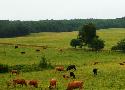
Une prairie avec ses vaches ne constitue pas, par exemple, une source, mais un puits de carbone. Une prairie de moyenne montagne absorbe environ une tonne de CO2 par hectare et par an.
Paul Ariès
... les ruminants se retrouvent fréquemment sous le feu des critiques en raison de leurs fortes émissions ce gaz à effets de serre (GES) ... liées à la gestion des effluents ou aux émissions de méthane dues à la fermentation entérique : les fameux « pets de vache » (en réalité plutôt de rots). La forte demande en terres, source de déforestation, y participe également (1).
...
composante essentielle du « pâturage holistique » prôné par le Savory Institute : l’idée est de faire pâturer un très grand nombre d’animaux sur une petite surface pendant une durée limitée. En fonction des variables agroécologiques du terrain, on planifie alors une rotation : les animaux sont périodiquement déplacés de parcelle en parcelle, laissant le temps à celles préalablement pâturées de se régénérer.
...
Maria Nordborg (13) conclut dans un rapport sur la méthode de Savory publié en 2015 que les bénéfices prétendus de cette approche « semblent exagérés et/ou manquent d’un large soutien scientifique » ... il semble que bien qu’il reste possible que cette approche ait bien des bénéfices, les prétentions de Savory sont, elles, totalement fantaisistes.
...
L’effet d’une pratique est extrêmement dépendant des conditions environnementales locales
...
Quel est le potentiel de séquestration ?
En France, une équipe de recherche de l’institut de l’élevage (Idele) et de l’INRA propose pour les prairies permanentes une séquestration de 570 kgC/ha/an, soit 2,1 tCO2-eq/ha/an (18)
...
une seule étude, ce n’est pas suffisant pour conclure que les forêts séquestrent plus de carbone que les prairies. En revanche, le fait que la conversion d’une prairie en champ cause de fortes émissions de GES est bien établi (19) (18) (14) (9) (3).
...
Henderson et coll. estiment uniquement un potentiel technique, alors que Smith et coll. proposent un potentiel économiquement viable pour différents prix attribués aux GES. Aussi, en plus de celui pour les prairies, Smith et coll. estiment le potentiel de mitigation des émissions de GES pour l’ensemble du secteur agricole.
...
la part d’herbe dans les rations des vaches françaises est de 60 % d’après Interbev (21). En fait, l’élevage en pâturage ainsi défini ne représente que 1/30e de la production de protéines animales, et seulement 1/80e de la production totale (5).
...
Conclusion
... la relation entre pâturage et séquestration est extrêmement complexe et sensible au contexte. ... La conclusion inévitable de ce rapport est que bien que les ruminants aient leur place dans un système alimentaire durable, cette place est limitée.
...
Références
-
FAO. Tackling Climate Change Through Livestock. Rome : s.n., 2013. p. 17.
-
Savory, Allan. Allan Savory: Comment transformer nos déserts en prairies et inverser le changement climatique. Youtube. [En ligne] 2013. [Citation : 16 Février 2020.] https://youtu.be/vpTHi7O66pI?t=1187.
-
Lal, Rattan. Soil carbon stocks under present and future climate with specific reference to European ecoregions. Nutrient Cycling in Agroecosystems. 2007, 81, pp. 113-127.
-
Schulze, E D, et al. Importance of methane and nitrous oxide for Europe’s terrestrial greenhouse-gas balance. Nature Geoscience. 2009, Vol. 2, 842-851.
-
Garnett, Tara, et al. Grazed and confused? Food Climate Research Network. 2017.
-
Soussana, J.F, Tallec, T et Blanfort, V. Mitigating the greenhouse gas balance of ruminant production systems through carbon sequestration in grasslands. Animal. Mars 2010, Vol. 4, 3, pp. 334-350.
-
Mc Sherry, Megan E. et Ritchie, Mark E. Effects of grazing on grassland soil carbon: a global review. Global Change Biology. 2013, Vol. 19, pp. 1347-1357.
-
Henderson, Benjamin B, et al. Greenhouse gas mitigation potential of the world’s grazing lands: Modeling soil carbon and nitrogen fluxes of mitigation practices. Agriculture, Ecosystems and Environment. 2015, Vol. 207, pp. 91-100.
-
Jones, Michael B. Potential for carbon sequestration in temperate grassland soils. [éd.] FAO. Integrated Crop Management. 2010, Vol. 11, pp. 1-18.
-
Forster, P, et al. Changes in Atmospheric Constituents and Radiative Forcing. [auteur du livre] GIEC. Climate Change 2007: The Physical Science Basis. Contribution of Working Group I to the Fourth Assessment Report of the Intergovernmental Panel on Climate Change. 2007.
-
Schader, Christian, et al. Impacts of feeding less food-competing feedstuffs to livestock on global food system sustainability. J. R. Soc. Interface. 2015, Vol. 12.
-
Eutrophisation. Wikipedia. [En ligne] Wikimedia Foundation, 18 Novembre 2019. [Citation : 16 Février 2020.] https://fr.wikipedia.org/wiki/Eutrophisation#Les_causes_de_l’eutrophisation.
-
Nordborg, Mari. Holistic management – a critical review of Allan Savory’s grazing method. Uppsala : SLU / EPOK – Center for Organic Food & Farming, 2016.
-
Conant, Richard T, et al. Grassland management impacts on soil carbon stocks: a new synthesis. Ecological Applications. 2017, Vol. 27, 2, pp. 662-668.
-
Smith, Pete, et al. Greenhouse gas mitigation in agriculture. Philosophical transactions of the Royal Society. 2008, 363, pp. 789-813.
-
Chang, Jinfeng, et al. Effect of climate change, CO2 trends, nitrogen addition, and land-cover and management intensity changes on the carbon balance of European grasslands. Global Change Biology. 2016, 22, pp. 338-350.
-
Still, Christopher J., et al. Global distribution of C3 and C4 vegetation: Carbon cycle implications. Global Biogeochemical Cycles. 2013, Vol. 17, 1.
-
Dolle, J-B, et al. Contribution de l’élevage bovin aux émissions de GES et au stockage de carbone selon les systèmes de production. Fourrages. 2013, 215, pp. 181-191.
-
Prix du carbone. Wikipédia. [En ligne] Wikimedia Foundation, 10 Février 2020. [Citation : 16 Février 2020.] https://fr.wikipedia.org/wiki/Prix_du_carbone.
-
World Bank, Ecofus, Vivid Economics. State and Trends of Carbon Pricing 2017. Washington, DC : World Bank, 2017. pp. 10-16.
-
Interbev. L’alimentation des bovins. la-viande.fr. [En ligne] [Citation : 16 Février 2020.] https://www.la-viande.fr/animal-elevage/boeuf/alimentation-bovins.
-
GIEC. Summary for Policymakers. Climate Change and Land: an IPCC special report on climate change, desertification, land degradation, sustainable land management, food security, and greenhouse gas fluxes in terrestrial ecosystems. 2019, p. 10.
Références -
FAO. Tackling Climate Change Through Livestock. Rome : s.n., 2013. p. 17.
-
Savory, Allan. Allan Savory: Comment transformer nos déserts en prairies et inverser le changement climatique. Youtube. [En ligne] 2013. [Citation : 16 Février 2020.] https://youtu.be/vpTHi7O66pI?t=1187.
-
Lal, Rattan. Soil carbon stocks under present and future climate with specific reference to European ecoregions. Nutrient Cycling in Agroecosystems. 2007, 81, pp. 113-127.
-
Schulze, E D, et al. Importance of methane and nitrous oxide for Europe’s terrestrial greenhouse-gas balance. Nature Geoscience. 2009, Vol. 2, 842-851.
-
Garnett, Tara, et al. Grazed and confused? Food Climate Research Network. 2017.
-
Soussana, J.F, Tallec, T et Blanfort, V. Mitigating the greenhouse gas balance of ruminant production systems through carbon sequestration in grasslands. Animal. Mars 2010, Vol. 4, 3, pp. 334-350.
-
Mc Sherry, Megan E. et Ritchie, Mark E. Effects of grazing on grassland soil carbon: a global review. Global Change Biology. 2013, Vol. 19, pp. 1347-1357.
-
Henderson, Benjamin B, et al. Greenhouse gas mitigation potential of the world’s grazing lands: Modeling soil carbon and nitrogen fluxes of mitigation practices. Agriculture, Ecosystems and Environment. 2015, Vol. 207, pp. 91-100.
-
Jones, Michael B. Potential for carbon sequestration in temperate grassland soils. [éd.] FAO. Integrated Crop Management. 2010, Vol. 11, pp. 1-18.
-
Forster, P, et al. Changes in Atmospheric Constituents and Radiative Forcing. [auteur du livre] GIEC. Climate Change 2007: The Physical Science Basis. Contribution of Working Group I to the Fourth Assessment Report of the Intergovernmental Panel on Climate Change. 2007.
-
Schader, Christian, et al. Impacts of feeding less food-competing feedstuffs to livestock on global food system sustainability. J. R. Soc. Interface. 2015, Vol. 12.
-
Eutrophisation. Wikipedia. [En ligne] Wikimedia Foundation, 18 Novembre 2019. [Citation : 16 Février 2020.] https://fr.wikipedia.org/wiki/Eutrophisation#Les_causes_de_l’eutrophisation.
-
Nordborg, Mari. Holistic management – a critical review of Allan Savory’s grazing method. Uppsala : SLU / EPOK – Center for Organic Food & Farming, 2016.
-
Conant, Richard T, et al. Grassland management impacts on soil carbon stocks: a new synthesis. Ecological Applications. 2017, Vol. 27, 2, pp. 662-668.
-
Smith, Pete, et al. Greenhouse gas mitigation in agriculture. Philosophical transactions of the Royal Society. 2008, 363, pp. 789-813.
-
Chang, Jinfeng, et al. Effect of climate change, CO2 trends, nitrogen addition, and land-cover and management intensity changes on the carbon balance of European grasslands. Global Change Biology. 2016, 22, pp. 338-350.
-
Still, Christopher J., et al. Global distribution of C3 and C4 vegetation: Carbon cycle implications. Global Biogeochemical Cycles. 2013, Vol. 17, 1.
-
Dolle, J-B, et al. Contribution de l’élevage bovin aux émissions de GES et au stockage de carbone selon les systèmes de production. Fourrages. 2013, 215, pp. 181-191.
-
Prix du carbone. Wikipédia. [En ligne] Wikimedia Foundation, 10 Février 2020. [Citation : 16 Février 2020.] https://fr.wikipedia.org/wiki/Prix_du_carbone.
-
World Bank, Ecofus, Vivid Economics. State and Trends of Carbon Pricing 2017. Washington, DC : World Bank, 2017. pp. 10-16.
-
Interbev. L’alimentation des bovins. la-viande.fr. [En ligne] [Citation : 16 Février 2020.] https://www.la-viande.fr/animal-elevage/boeuf/alimentation-bovins.
-
GIEC. Summary for Policymakers. Climate Change and Land: an IPCC special report on climate change, desertification, land degradation, sustainable land management, food security, and greenhouse gas fluxes in terrestrial ecosystems. 2019, p. 10.
-
Soussana, J-F, et al. Carbon cycling and sequestration opportunities in temperate grasslands. Soil Use and Management. 2004, 20, pp. 219-230.
-
Soussana, J-F, et al. Carbon cycling and sequestration opportunities in temperate grasslands. Soil Use and Management. 2004, 20, pp. 219-230.
Ndlr : crédible ? biais du véganisme ? ACT

...
Nous appelons « Bloc des Justices » la nécessaire voie entre un « Bloc Identitaire » (ou nationaliste), ayant été capable de recruter à droite chez les nationalistes et à gauche plus récemment, et un « Bloc Néolibéral » (ou productiviste). Ce « Bloc des Justices » transcende le clivage gauche-droite et propose une société radicalement juste et égalitaire, entre les humains, et vis à vis du vivant qui l’entoure et dont il fait partie.
Il est composé de la plupart des électeurs des partis listés ci-après (Cap Ecologie, Europe-Ecologie-Les Verts, Ensemble !, Gauche Démocratique et Sociale , Génération.s, Gauche Républicaine et Socialiste, La France Insoumise, Nouveaux Démocrates, Nouvelle Donne, Parti Communiste Français, PEPS, Place Publique, Parti Socialiste) même si certains d’entre eux peuvent se laisser convaincre par un récit réactionnaire ou néolibéral en fonction des échéances électorales ou de l’actualité.
Le « Bloc des Justices » rejoint également une partie des abstentionnistes, des déçus des partis traditionnels. Le « Bloc des Justices » peut enfin rassembler des personnes ayant un vote RN purement contestataire, souvent fait de désespoir, et en aucun cas identitaire.
...
Notre socle commun
Ces 10 propositions de rupture pour changer la vie des gens sont inspirées des revendications des mouvements sociaux de ces dernières années (Gilets Jaunes, jeunes pour le climat, luttes sociales, féministes, antiracisme, syndicats…) et de conversations approfondies avec un grand nombre d’organisations de la société civile, ainsi que les partis politiques suivants : Cap Ecologie, Europe-Ecologie-Les Verts, Ensemble !, Gauche Démocratique et Sociale , Génération.s, Gauche Républicaine et Socialiste, La France Insoumise, Nouveaux Démocrates, Nouvelle Donne, Parti Communiste Français, PEPS, Place Publique, Parti Socialiste.
...
Parrainez les meilleurs candidats et candidates pour gagner la présidentielle en 2022 !
Une candidature gagnante en 2022 ? Oui mais qui ? Parrainez les personnalités les plus convaincantes. Les 5 femmes et les 5 hommes ayant le plus de parrainages et adhérant à ce socle commun, pourront devenir candidats officiels à la Primaire Populaire. À vous de choisir !
Jean-Luc Mélenchon 1562
Fabien Roussel 140
Arnaud Montebourg 449
Anne Hidalgo 531
Sandrine Rousseau 1675
Gérard Filoche 208
Eric Piolle 1494
Yannick Jadot 379
Pierre Larrouturou 1345
François Ruffin 2847
Christiane Taubira 4296
Gaël Giraud 1202
mis à jour le 13/07/2021 à 06:40
...
Mentions légales plateforme primairepopulaire.fr mise à disposition par l’association “2022 OU JAMAIS”, dont le siège est situé 16, rue Bernard du Bois, 13001 Marseille 1, France. SIRET : 897 446 951 00013
Hébergement : OVH SAS, serveurs situés en France
Email : contact@primairepopulaire.fr
Directeur de la publication : Ninon Lagarde
Web Design : Ariane Seibert
Développeurs web : Maxime Senza et Théo Naciri
...
Connu / https://tools.immae.eu/Shaarli/ind1ju/?Vf0Apg
Ndlr : points problématiques :
- les conditions de sécurité pour n'avoir qu'un seul compte par personne sont aisément contournables (il suffit d'avoir plus d'un couple mel+mob) sic
- les candidats doivent s'engager à ne pas candidater à la présidentielle en cas de défaite sic
- vote uniquement électronique élimine des citoyens
- complexité de l'ensemble pas accessible à tous les citoyens
- la définition de « Bloc des Justices » n'est-elle pas sujette à caution dans la mesure où elle n'impose pas à des partis ayant gouverné comme le PS une autocritique ?
- exclusion des partis de droite et du centre car considérés comme libéraux ou productivistes ?
CONCLUSION : je ne cautionne pas donc je ne participe pas :-(
Dommage car il y avait de bonnes idées.